How Induced Electric Field Heating Works and Why It’s Different
Explore how conventional indirect heating, direct ohmic heating, and BioMag’s electrode-free induced electric field (IEF) heating differ in how they deliver energy and generate heat.
01 / INDIRECT HEATING
Heat Transfer and Heat Conduction
Heat moves from the walls into the product. As a result, the product near the walls can heat up faster than the center, creating an uneven temperature distribution.
02 / DIRECT OHMIC HEATING
Internal Heating Based on Electrodes
Electrodes in direct contact with the product passing an electric current through it, generating Joule heat within the product.
03 / BIOMAG IEF
Internal Heating Without Electrodes
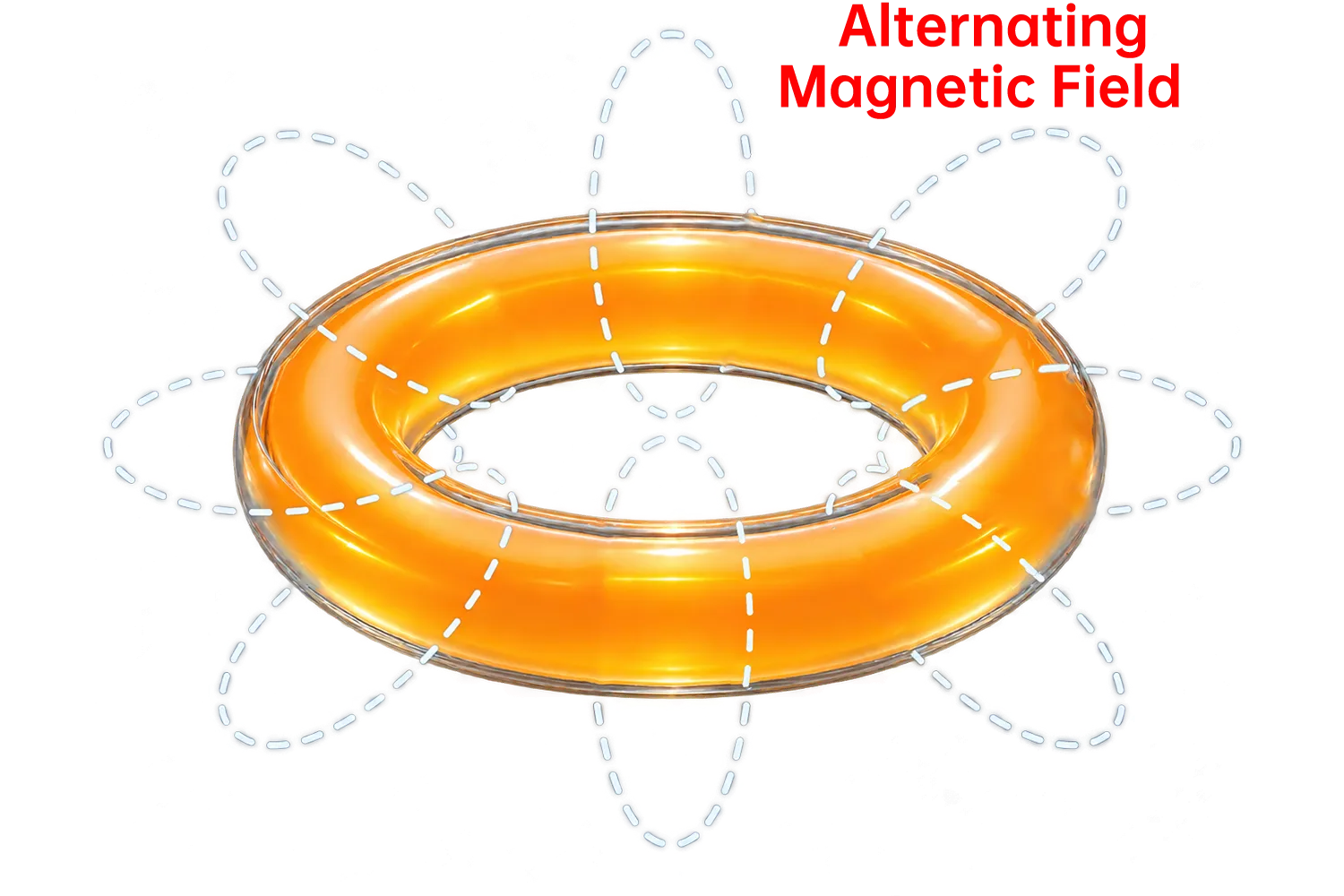
An oscillating magnetic field induces an electric field in the product. This field drives the motion of ions and charge carriers, generating Joule heat within the product, it’s non-contact process.
Selected Patent Applications EP 26174940.2, US 2026/0223258 A1, JP 2026-100642, US 2025/0244290 A1
ENGINEERED ADVANTAGES
Advantages of BioMag's IEF Technology
01 / THERMAL & NON-THERMAL EFFECTS
Induced Heating with Potential Field Effects
Low-frequency induced electric fields generate internal Joule effect through free ions and charge carriers. Beyond thermal effects, nonthermal effect’s influences on microbial inactivation and chemical reaction kinetics can be investigated under controlled conditions.
02 / ELECTRODE-FREE PROCESSING
Preserve Protein Functionality and Reduce Fouling
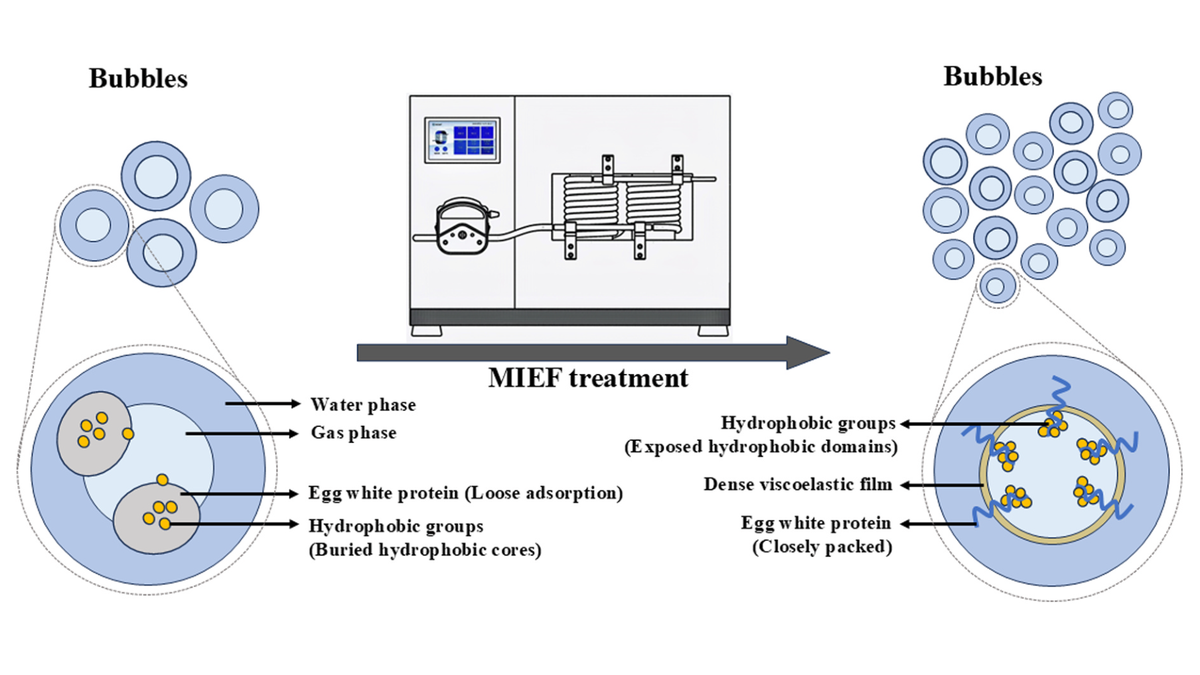
Non-contact heating process helps helps reduce contamination and fouling, which can reduce the need for frequent cleaning in place (CIP). For liquid whole egg and functional protein beverages, processing at 60–70 °C aims to preserve foaming and emulsifying properties while achieving the required level of microbial reduction. That reduction must be validated for each product and process.
03 / HEAT-SENSITIVE BEVERAGES
Microbial Safety with Better Quality Retention
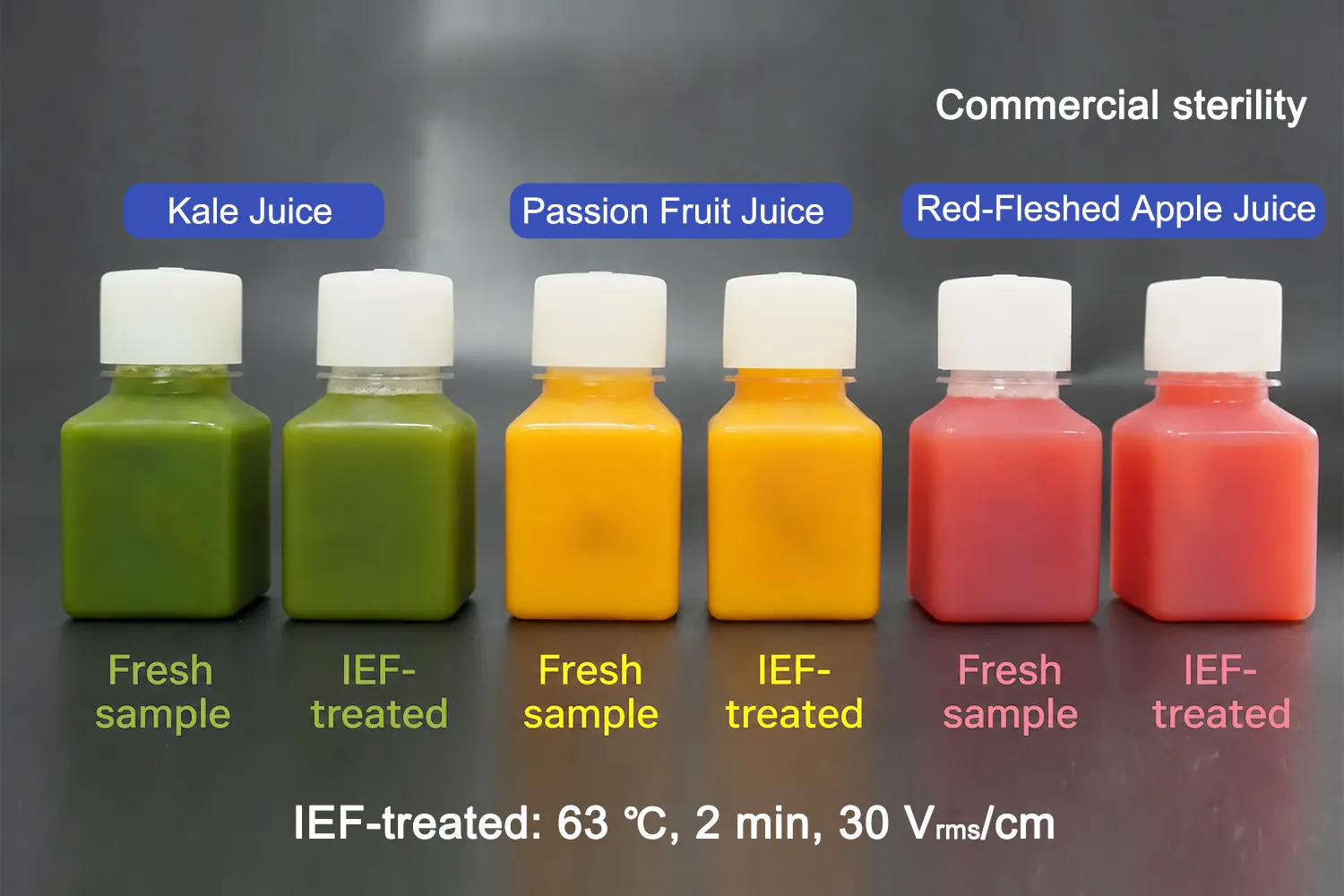
Processing at 60–70 °C aims to reduce microbial counts within 5 minutes while preserving natural color and flavor. This approach can be evaluated for acidic juices such as bayberry, apple, passion fruit, and grape juice, as well as for concentrated tea and coffee juice. Commercial sterility requires product-specific validation.
04 / VOLUMETRIC HEATING
Uniform Heating for Liquids and Particulates
Volumetric heating promotes a more uniform temperature distribution, helping to reduce cold and hot spots. The system supports flow-path diameters of 20–100 mm, with larger diameters available as custom options. It provides volumetric heating for liquids and foods containing particles up to approximately 25 mm in size. Direct heating efficiency can exceed 85%. With heat recovery, efficiency can exceed 95% in appropriately configured systems.
05 / FLEXIBLE SYSTEM INTEGRATION
PLC-Ready, Customizable Heating Modules
The heating modules offer adjustable excitation frequency and voltage. Configurable control interfaces support integration with industrial PLC systems and automated production lines. OEM/ODM configurations can be tailored to specific processing and scale-up requirements.
06 / CHEMICAL REACTION ENGINEERING
Electrode-Free Batch & Continuous Processing
IEF Batch & Continuous Processing IEF Heating Reactor provides non-contact heating for reaction medium, particularly those with an electrical conductivity above 2,000 µS/cm. The platform supports batch and continuous processing at atmospheric or elevated pressure. It can be used to evaluate potential gains in energy efficiency and investigate how the applied field affects products and reaction kinetics.