
Understanding the Hidden Role of Surfaces in Reaction Systems
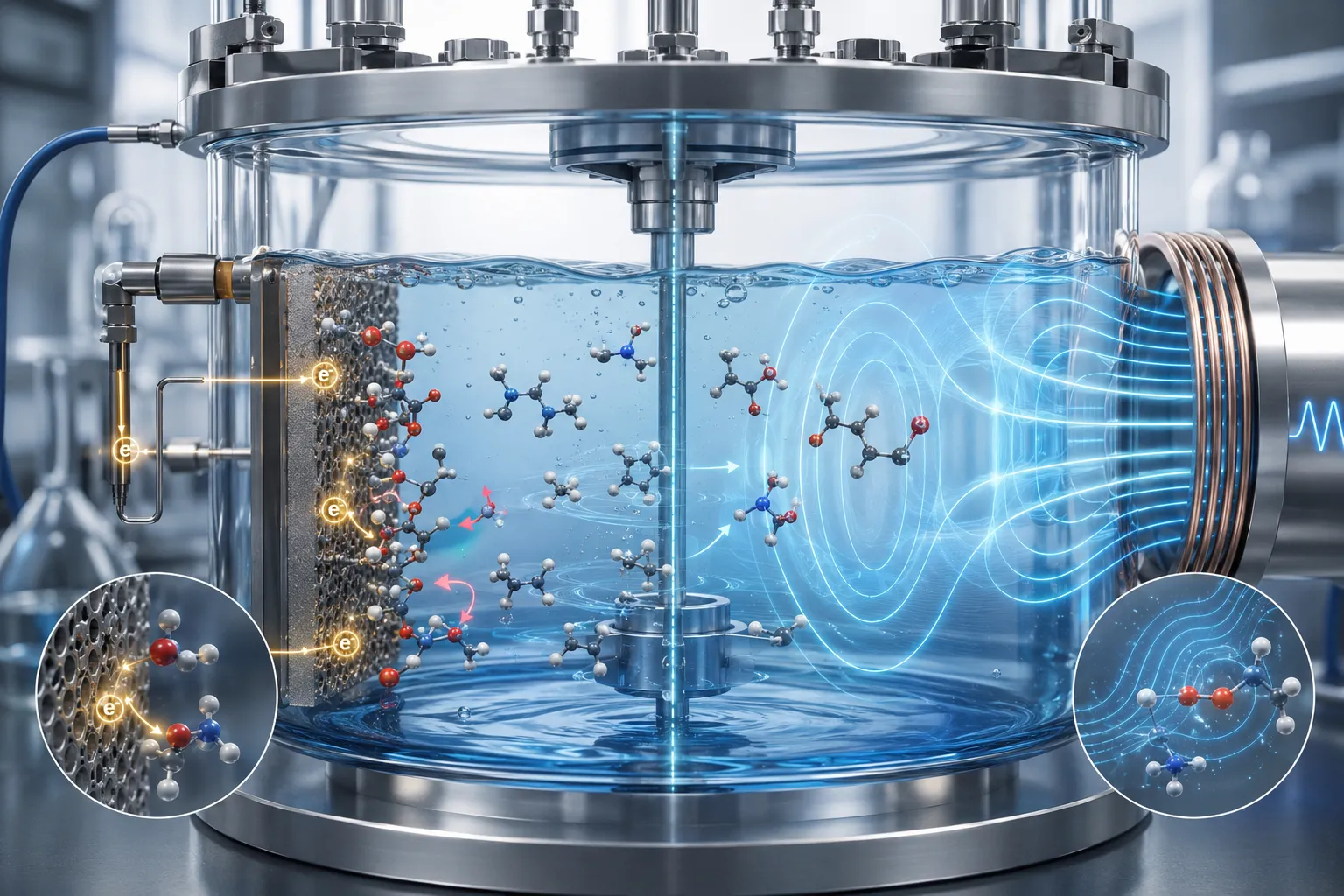
Interfaces play a critical role in modern chemistry.
From catalysts to electrodes, surfaces often determine how materials interact and how reactions proceed.
In many processes, the interface is where the most important events happen:
•Electron transfer
•Molecular interaction
•Energy exchange
•Chemical transformation
However, interfaces can also create challenges.
In advanced chemical systems, researchers need to understand:
•How surfaces influence reactions
•How materials interact at boundaries
•How unwanted effects can be minimized
For example, electrode-based systems may introduce additional surface effects that influence reaction behavior.
This is particularly important when working with:
•Sensitive materials
•Complex solutions
•Long-term processes
As chemistry moves toward more precise control, researchers are exploring approaches that reduce dependence on fixed interfaces.
Field-driven technologies provide a new perspective by investigating how energy can interact with chemical systems without relying solely on direct surfaces.
This shift represents a broader change in chemical engineering:
From controlling only the material interface,
to understanding the entire reaction environment.
At Biomag, we explore how electromagnetic field technologies can provide new tools for researchers studying complex chemical systems.
Biomag ReactionFlux™ — investigating new possibilities beyond traditional interfaces.