
The Challenge of Precise Material Synthesis and Modification
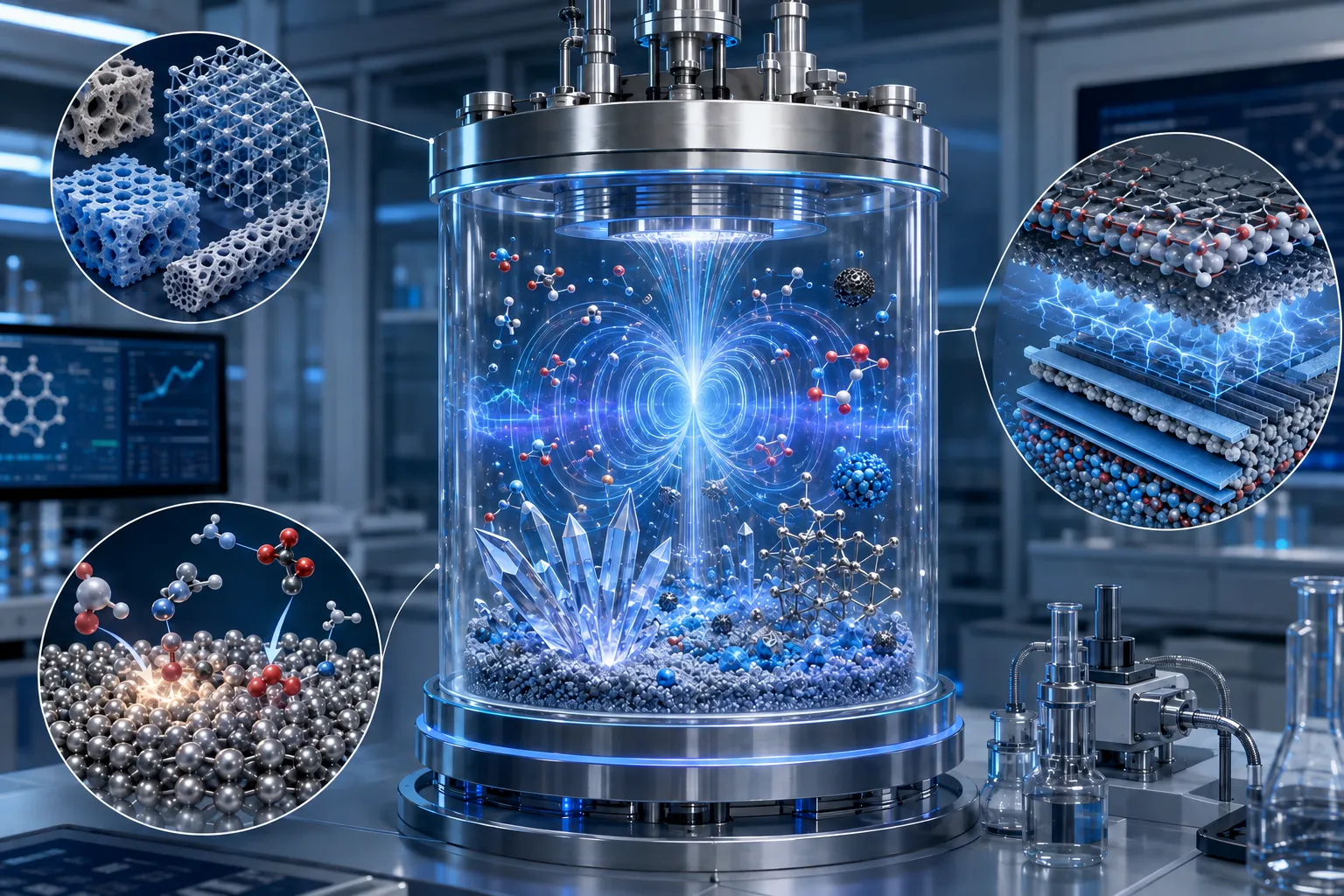
Advanced materials are shaping the future of technology.
From energy storage and electronics to healthcare and sustainable manufacturing, new materials are enabling new possibilities.
However, developing advanced materials is not only about discovering new compositions.
It is also about controlling:
•Structure
•Organization
•Properties
•Performance
Small differences during synthesis can significantly influence final material characteristics.
Researchers must carefully manage:
•Reaction conditions
•Energy input
•Molecular interactions
•Processing environment
Traditional approaches have achieved major breakthroughs, but increasingly complex materials require more precise control.
This has led researchers to explore new synthesis strategies.
One emerging direction is field-assisted material processing.
By introducing controlled electromagnetic fields, scientists can study how external energy environments influence:
•Material formation
•Molecular interactions
•Reaction behavior
Potential research areas include:
Functional Materials
Exploring new approaches for designing advanced material properties.
Catalytic Systems
Investigating improved synthesis and modification strategies.
Energy Materials
Studying new pathways for future technologies.
The next generation of materials will not only depend on what they are made of.
It will depend on how precisely they can be created.
At Biomag, we explore how controlled fields can open new possibilities in material innovation.
Biomag ReactionFlux™ — exploring field-assisted approaches for advanced materials.