
Exploring New Reaction Environments Beyond Traditional Interfaces
Many chemical processes rely on direct contact between materials and energy sources.
Electrochemical systems are one example.
By using electrodes, researchers can precisely influence electron transfer and reaction behavior.
However, direct interfaces can also introduce complexity.
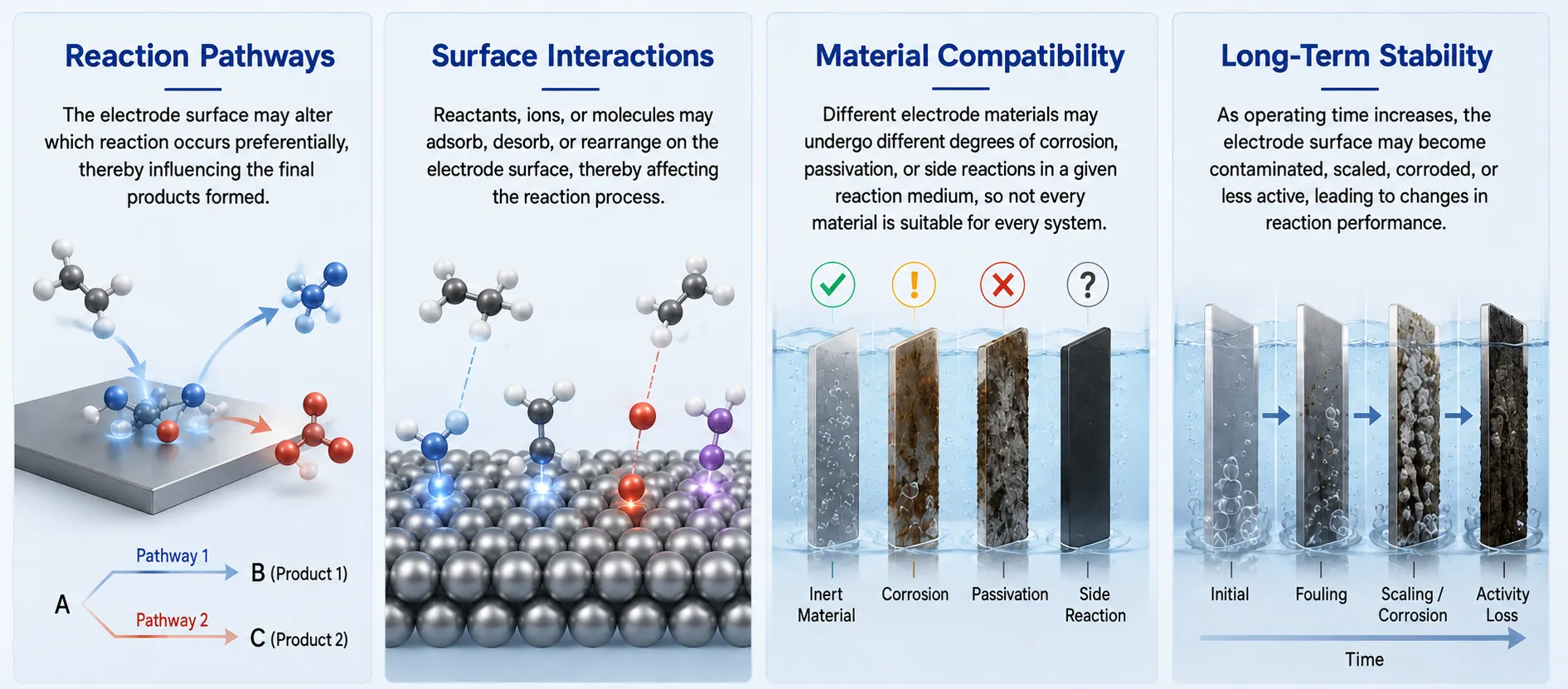
The electrode surface may influence:
•Reaction pathways
•Surface interactions
•Material compatibility
•Long-term stability
This raises an interesting question:
Can chemical environments be controlled without direct physical contact?
A new research direction is emerging:
Using external fields to influence reaction systems.
Instead of introducing an energy source directly into the reaction environment, controlled electromagnetic fields provide another way to study energy interaction.
Researchers can investigate how fields influence:
•Charged species
•Molecular behavior
•Reaction conditions
This concept does not replace traditional chemistry.
Rather, it expands the toolbox available for scientists exploring complex systems.
Potential research areas include:
•Advanced synthesis
•Material modification
•Chemical process development
•Bio-related transformations
The future of reaction engineering may involve not only controlling what reacts,
but also controlling the environment where reactions occur.
At Biomag, ReactionFlux™ explores the possibilities of field-driven reaction environments beyond direct contact.
Biomag ReactionFlux™ — exploring chemistry through new energy interactions.