
Exploring New Possibilities in Reaction Engineering
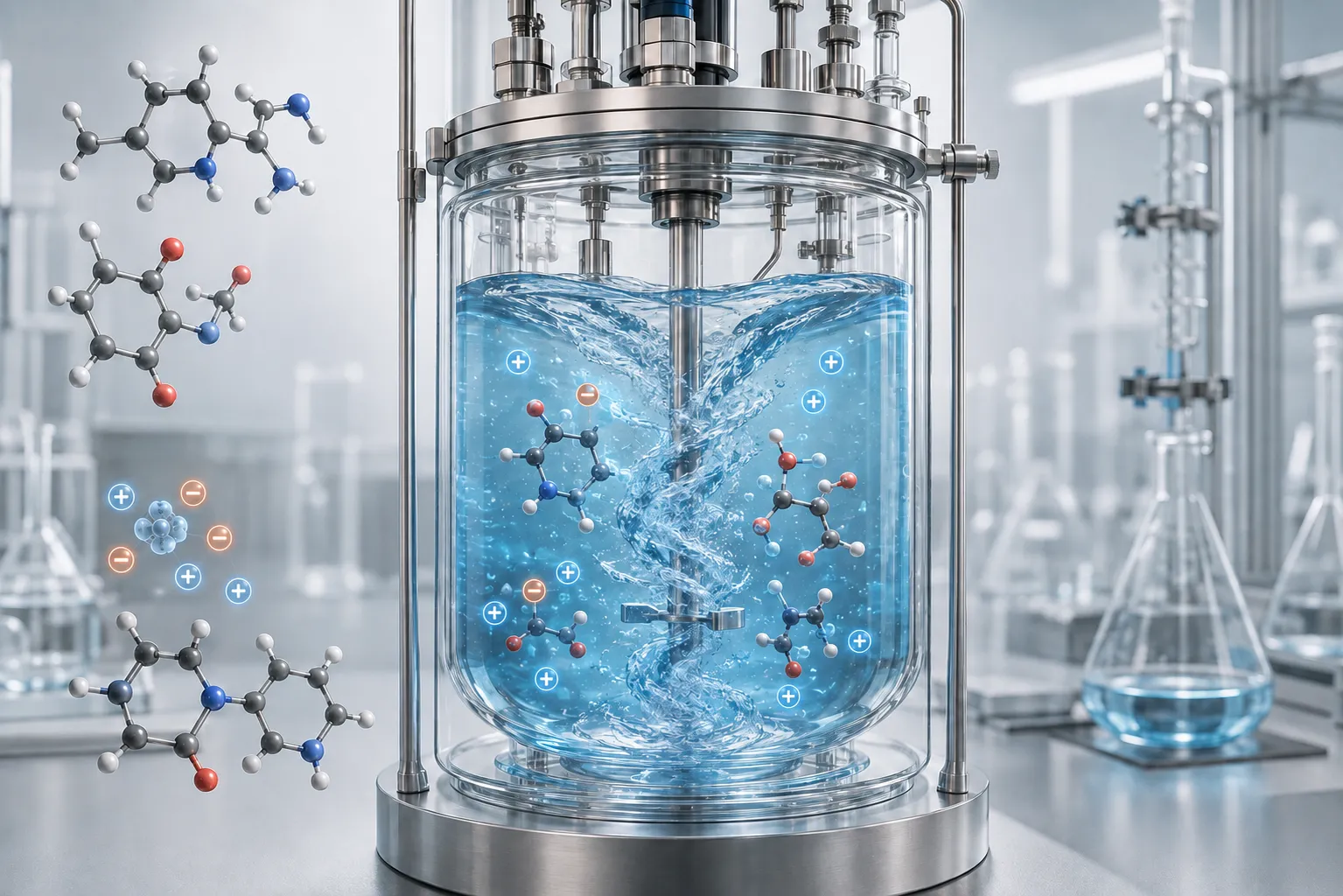
Chemical manufacturing has always been built around controlling reactions.
For decades, researchers and engineers have optimized processes through:
•Temperature
•Pressure
•Catalysts
•Reaction conditions
These approaches have enabled remarkable progress in pharmaceuticals, materials, energy, and industrial chemistry.
However, as chemical systems become more complex, traditional control methods are facing new challenges.
The question is:
Can we find new ways to control how energy interacts with chemical systems?
Modern chemical reactions are not only determined by reactants and catalysts.
They are also influenced by:
•Energy distribution
•Reaction environment
•Molecular interactions
•Transport processes
Small changes in reaction conditions can significantly affect:
•Reaction efficiency
•Selectivity
•Material properties
This has encouraged researchers to explore additional parameters beyond conventional methods.
Electromagnetic fields provide a new perspective for studying reaction environments.
Instead of focusing only on chemical components, researchers can investigate how controlled fields interact with matter.
This approach explores the relationship between:
•Energy input
•Charged species
•Molecular structures
•Reaction behavior
The future of chemical engineering may not only depend on developing new molecules.
It may depend on discovering new ways to control the environment where reactions occur.
At Biomag, we explore how controlled electromagnetic field technologies can provide new perspectives for reaction engineering and chemical innovation.
Biomag ReactionFlux™ — exploring new pathways for field-driven chemistry.