
Turning Scientific Innovation Into Real Industrial Value
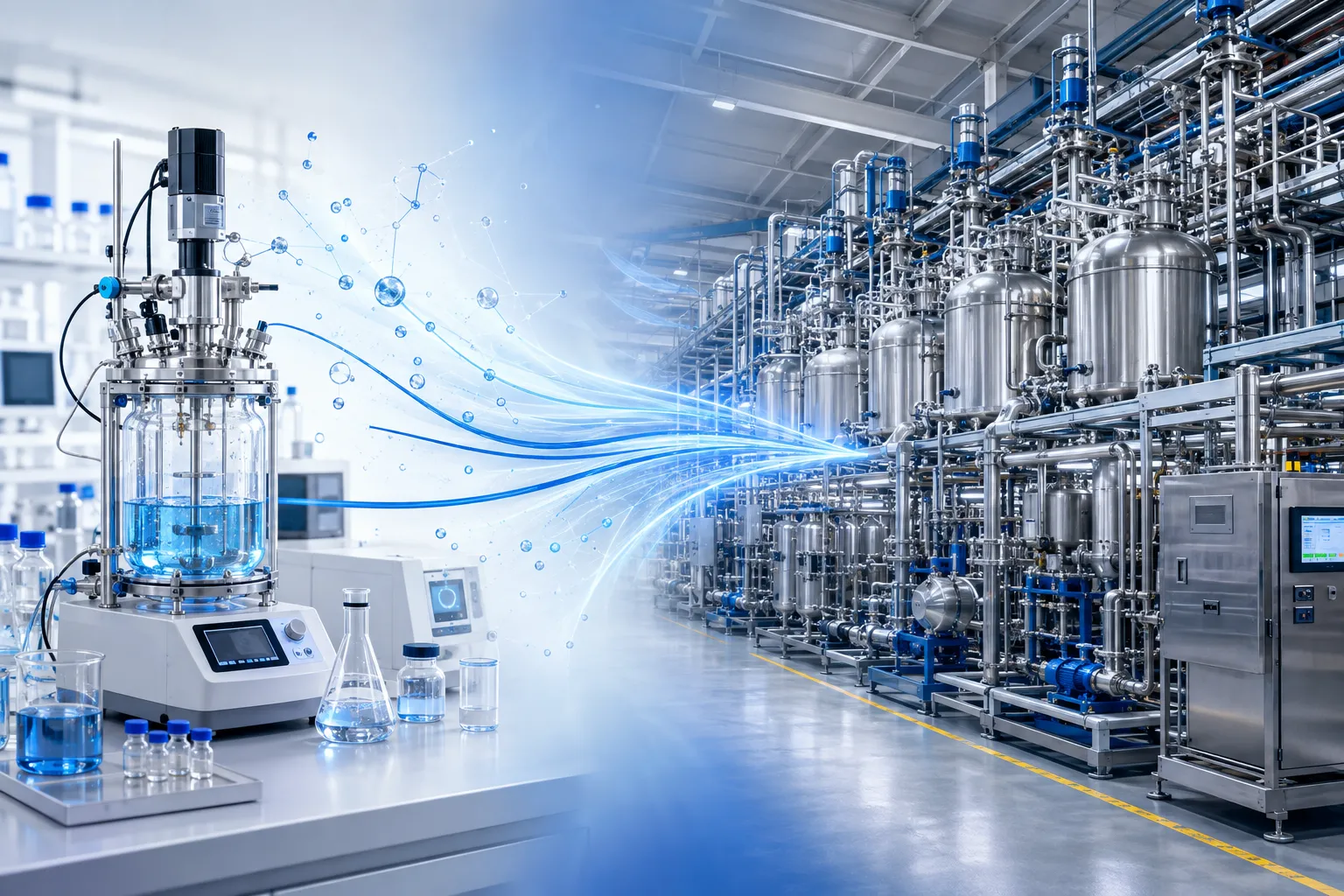
Every breakthrough technology begins with an idea.
A new scientific discovery.
A promising laboratory result.
A better solution to an existing challenge.
However, not every promising technology reaches industrial application.
The reason is often not the science itself.
It is scale-up.
A process that works perfectly in a laboratory may face completely different challenges in industrial environments.
At small scale, researchers can carefully control:
•Materials
•Conditions
•Energy input
•Reaction time
But production requires:
•Continuous operation
•Stable performance
•Reliable quality
•Economic feasibility
The challenge is transforming a scientific concept into a repeatable manufacturing process.
Scale-up is not simply making equipment larger.
It requires understanding how:
•Flow changes
•Energy distribution changes
•Materials behave differently
•Process parameters interact
A successful industrial technology requires both scientific understanding and engineering optimization.
This is why many innovations require intermediate development stages before commercial adoption.
Pilot systems, process validation, and engineering evaluation help bridge the gap between discovery and manufacturing.
At Biomag, we believe successful innovation happens when science meets engineering.
Through advanced processing platforms, we explore how emerging technologies can move from laboratory concepts toward industrial solutions.
Biomag — connecting innovation with industrial possibilities.