
Why Complex Food Systems Require More Flexible Processing Solutions
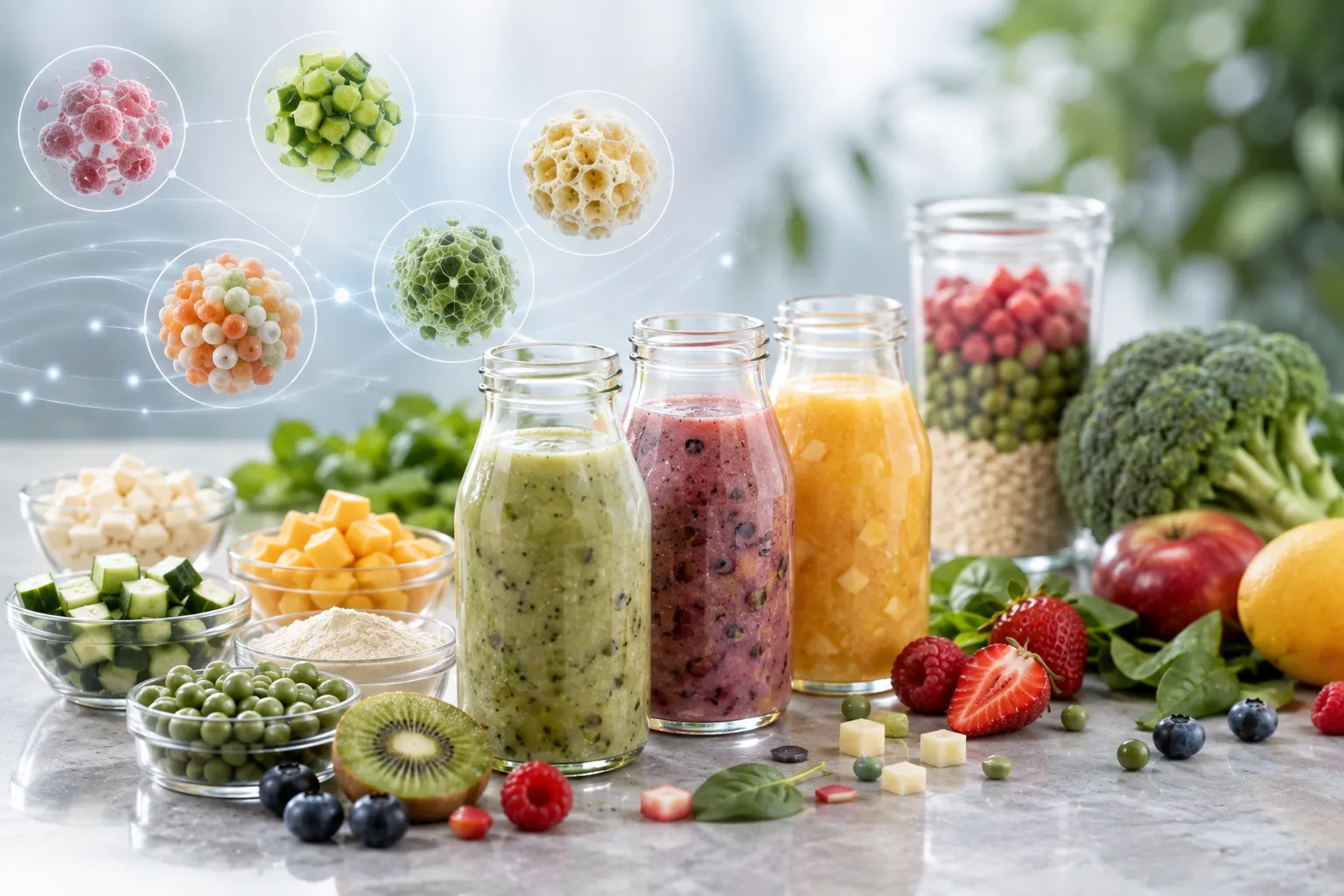
Modern food products are becoming increasingly complex.
Many innovative foods are no longer simple liquids.
They contain:
•Fruit pieces
•Vegetable particles
•Protein structures
•Functional ingredients
These products create unique processing challenges.
Unlike homogeneous fluids, particle-containing foods contain multiple components with different physical properties.
During processing, differences in:
•Size
•Composition
•Electrical properties
•Thermal behavior
can influence energy distribution and product consistency.
For manufacturers, the challenge is achieving:
•Safe processing
•Uniform treatment
•Stable quality
•Desired product characteristics
Traditional processing methods work well for many applications, but complex food systems require deeper understanding of how different components respond.
This is driving interest in more advanced processing approaches.
Electromagnetic field-assisted technologies provide a new perspective by allowing researchers to investigate interactions between controlled fields and heterogeneous food systems.
The goal is not simply to process faster.
It is to better understand how different parts of a food system respond.
As the food industry continues to develop new products, flexible processing technologies will become increasingly important.
Biomag FluxFresh™ — exploring new solutions for complex food processing challenges.